
In autumn, the Bieszczady Mountains reveal a completely different side. The forests turn into a mosaic of colours, while mornings greet visitors with mysterious mist. This is the perfect time to plan a stay in this part of Poland’s Podkarpackie region. Where should you go? We have selected eight places in the Bieszczady Mountains that are definitely worth seeing in autumn.
1. Połonina Caryńska - Bieszczady autumn in all its glory
If golden autumn in the Bieszczady Mountains makes you think of sweeping panoramas, russet grasses and colourful forests stretching all the way to the horizon, this is the place to start. Połonina Caryńska is one of the best spots from which to admire the Bieszczady Mountains in their autumn colours from above.
The full route from Ustrzyki Górne to Brzegi Górne is approximately 9 km long. Once you climb above the tree line, the most beautiful part of the hike begins: an open ridge with views towards Tarnica, Rawka and the neighbouring Połonina Wetlińska, among others.
Practical tips:
- After rain, the ascent can be slippery, as some Bieszczady trails have a clay surface.
- If photography is your priority, choose a clear morning or late afternoon, when the light brings out the colours of the slopes at their best.
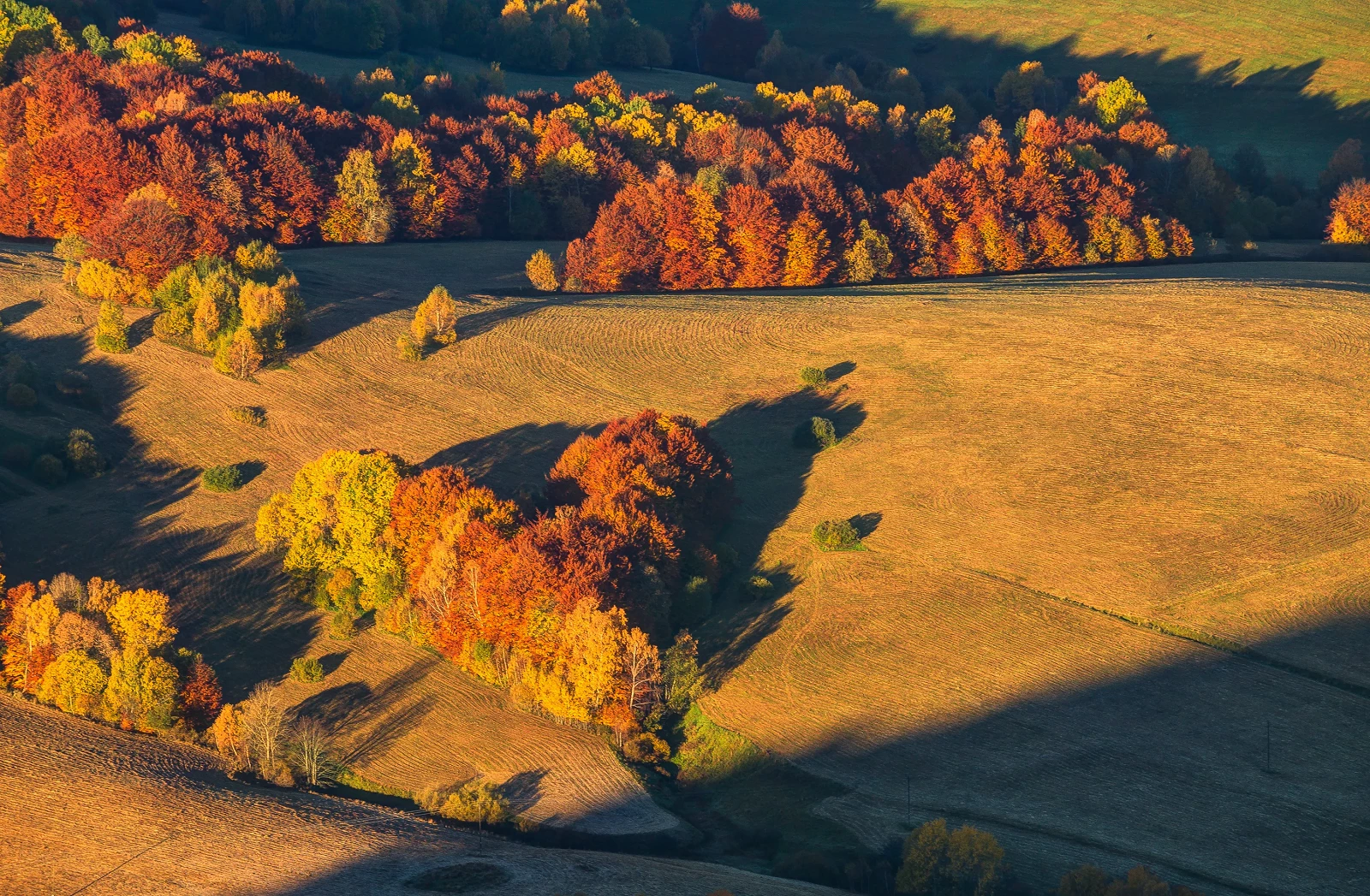 Połonina Caryńska, photo by Katarzyna Preus
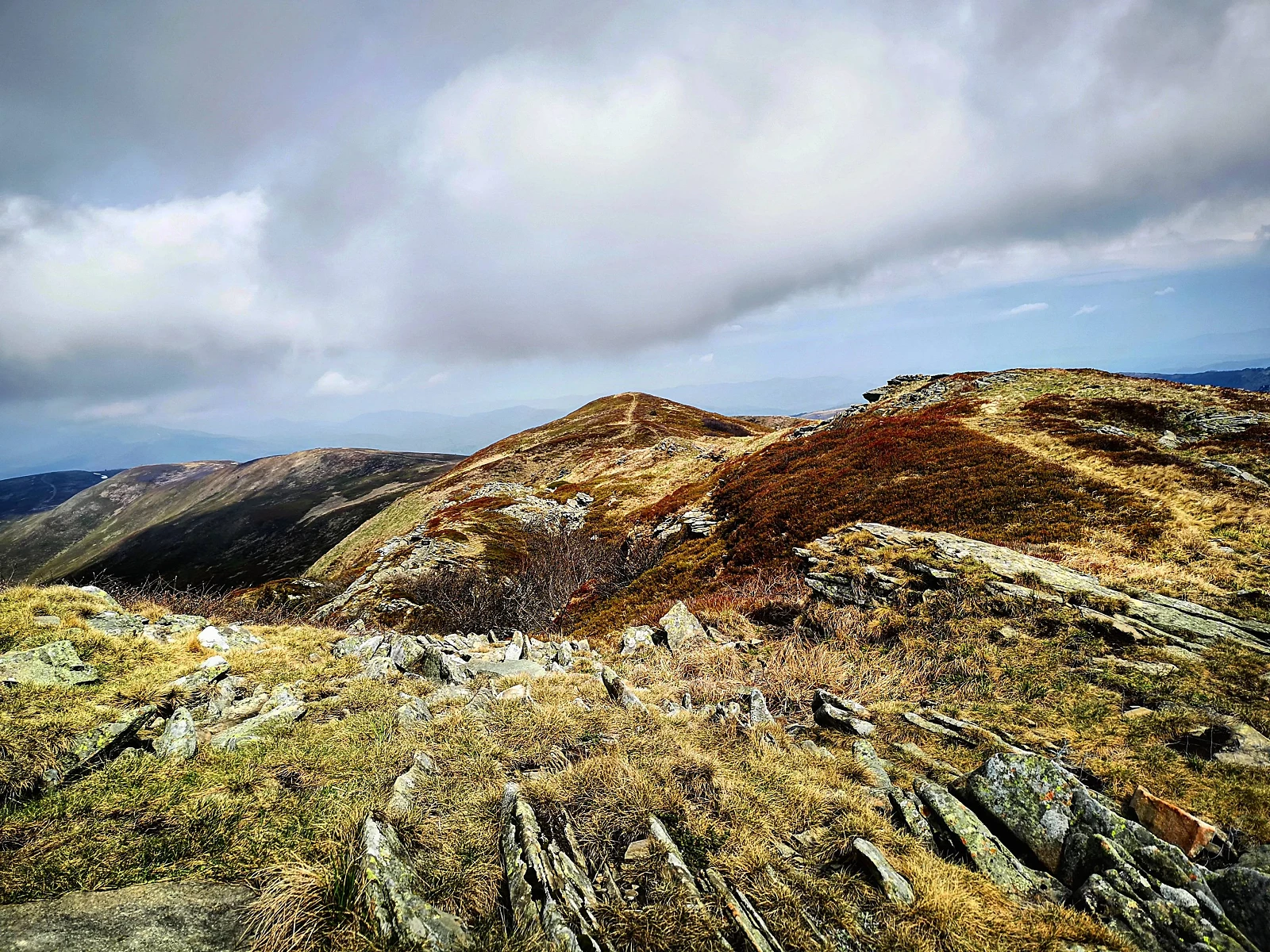 Tarnica, photo by Adam Górnikowski
2. Tarnica - a classic that looks completely different in autumn
The highest peak in the Polish Bieszczady Mountains needs little introduction, but autumn is the perfect time to see it again. The ascent from Wołosate initially leads through forest, which in October can turn into a spectacular tunnel of colour. The higher you climb, the broader the panorama becomes, revealing more and more golden and rust-coloured slopes.
The most popular route follows the blue trail from Wołosate to the pass below Tarnica, followed by the yellow trail to the summit itself. According to Bieszczady National Park, the Wołosate–Tarnica trail is approximately 4.4 km long, with the ascent taking just over two hours on average.
Practical tip:
In autumn, the difference in temperature between Wołosate and the exposed summit can be considerable. Even on a sunny day, it is worth carrying an extra layer and a windproof jacket in your backpack.
3. Duszatyn Lake - autumn straight out of a fairy tale
You do not have to admire autumn in the Bieszczady Mountains exclusively from mountain ridges. The Duszatyn Lakes are one of the best places to see what happens deep inside the Bieszczady forests at this time of year.
The two lakes were formed in 1907 as a result of a massive landslide on the slopes of Chryszczata. Today, they are surrounded by forest, whose autumn colours are reflected in the calm surface of the water. Add some morning mist and the place takes on an almost mysterious atmosphere.
The easiest option is the red trail from Duszatyn, approximately 4 km each way.
Practical tip: This is an excellent choice for a day when you do not feel like climbing high peaks. After heavy rainfall, however, be prepared for mud and slippery sections of the forest trail.
4. Mała Rawka, Wielka Rawka i Kremenaros - three destinations in one hike
This route has everything you could want from an autumn day in the Bieszczady Mountains: beech forest, open views, two peaks and, at the end, a place where the borders of Poland, Slovakia and Ukraine meet.
From Przełęcz Wyżniańska, the trail leads towards the PTTK mountain hut below Mała Rawka, then continues to Mała Rawka and Wielka Rawka before reaching Krzemieniec, also known as Kremenaros. The route ending with a descent towards Ustrzyki Górne is approximately 12 km long.
In autumn, the panorama from Wielka Rawka is particularly impressive, with the distinctive mountain meadows rising above the colourful forests.
Practical tip:
The ascent from the mountain hut to Mała Rawka is quite steep. Do not be fooled by the gentle beginning of the route – it is worth saving some energy for the later stages of the hike.
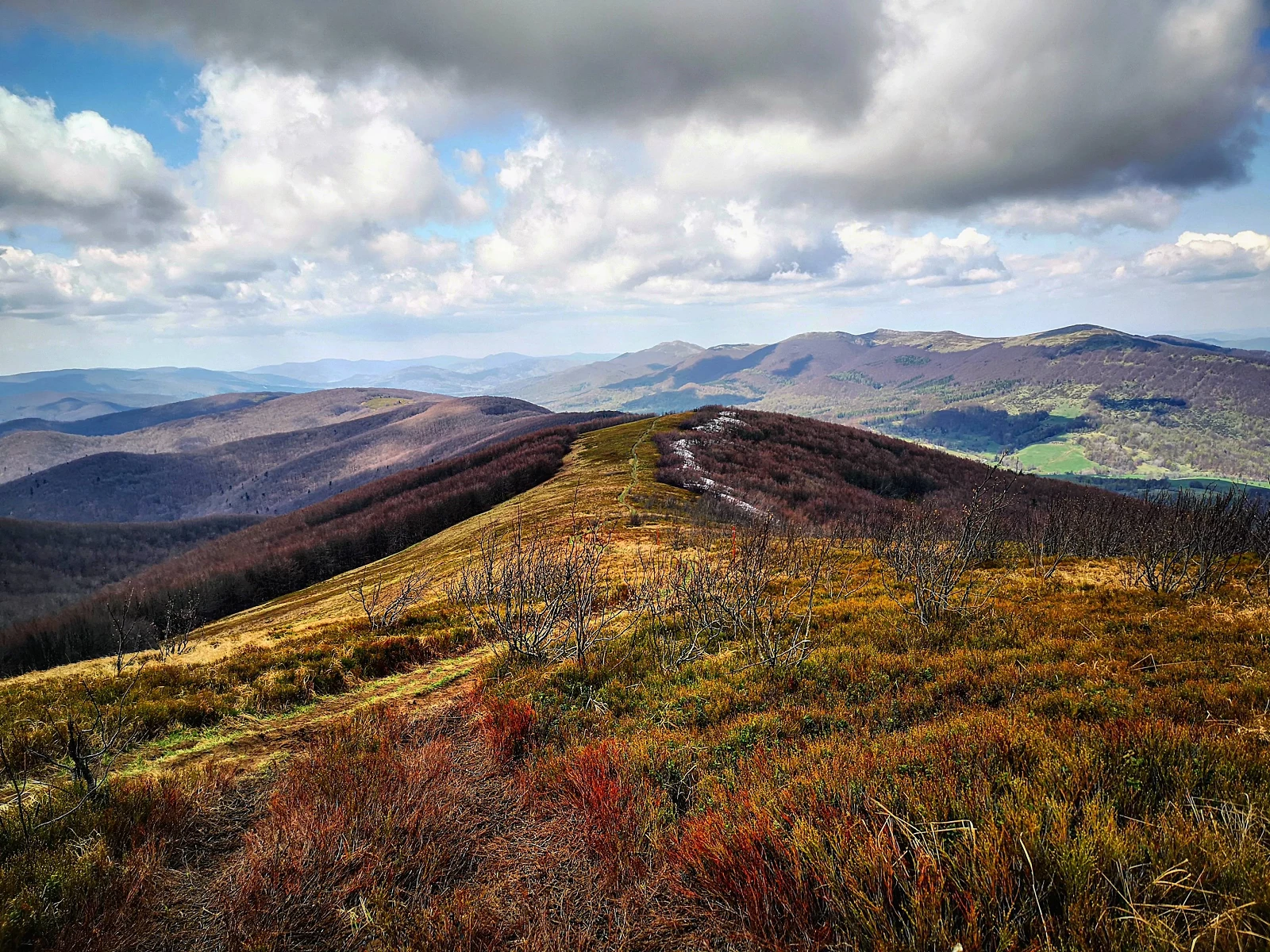 Mała Rawka, photo by Adam Górnikowski
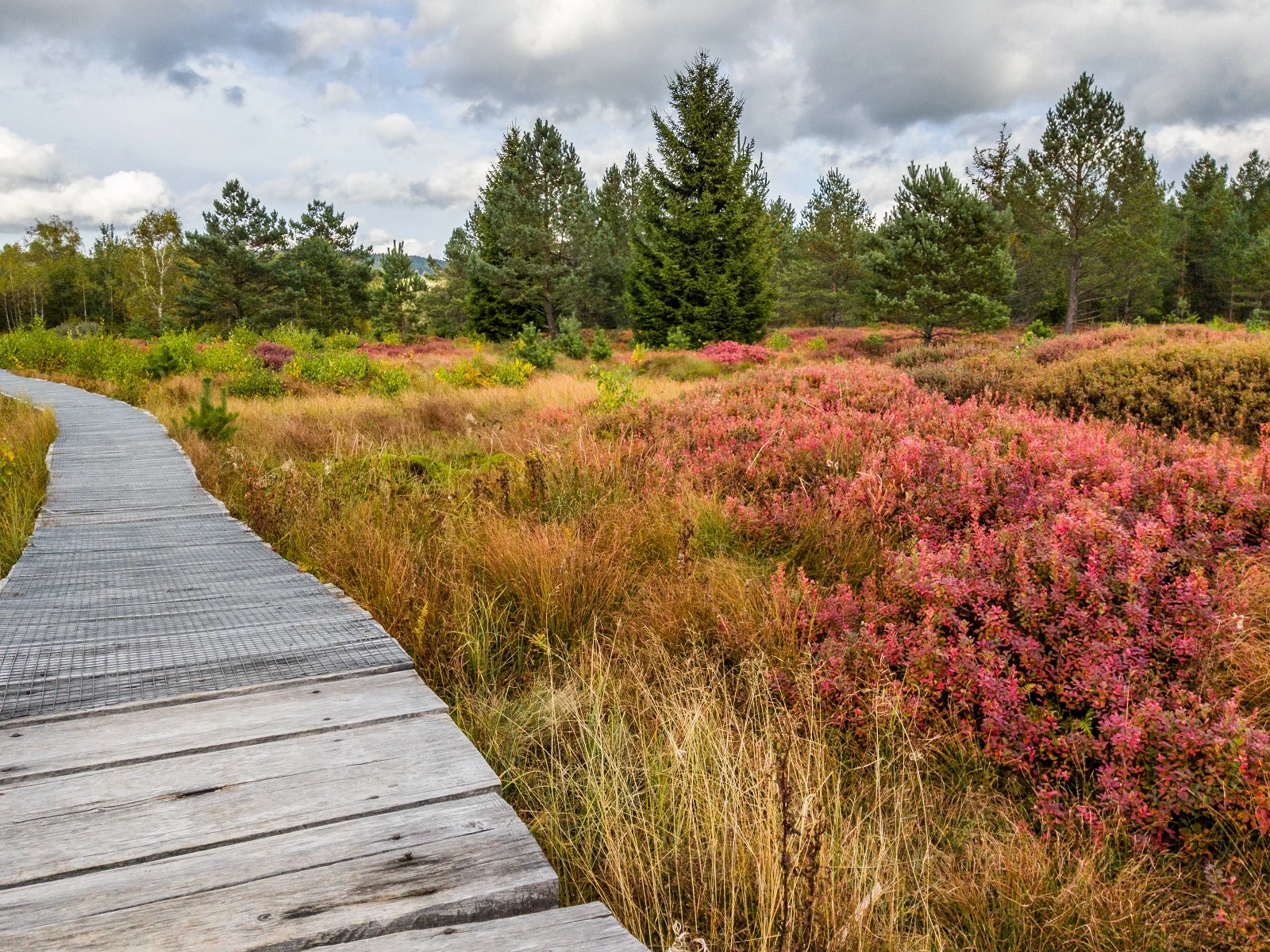 Torfowisko Tarnawa, photo by Klaudia Więcek
5. The peat bogs of Tarnawie - a completely different side of the Bieszczady Mountains
Need a break from long climbs? Head to Tarnawa Wyżna. The local peat bogs reveal a side of the Bieszczady Mountains that you will not see on the high mountain meadows.
Wooden boardwalks run through the peat bogs, allowing visitors to explore one of the most unusual parts of Bieszczady National Park without embarking on a demanding mountain hike. In autumn, the landscape becomes more rugged: green gives way to shades of brown, rust and golden grasses, with the Bieszczady ranges rising in the background.
Practical tip:
This is a great option for a more relaxing day or as a stop while exploring the Upper San Valley. It is worth combining the visit with a drive through Tarnawa Niżna and further into the area known as the “Bieszczady Sack”.
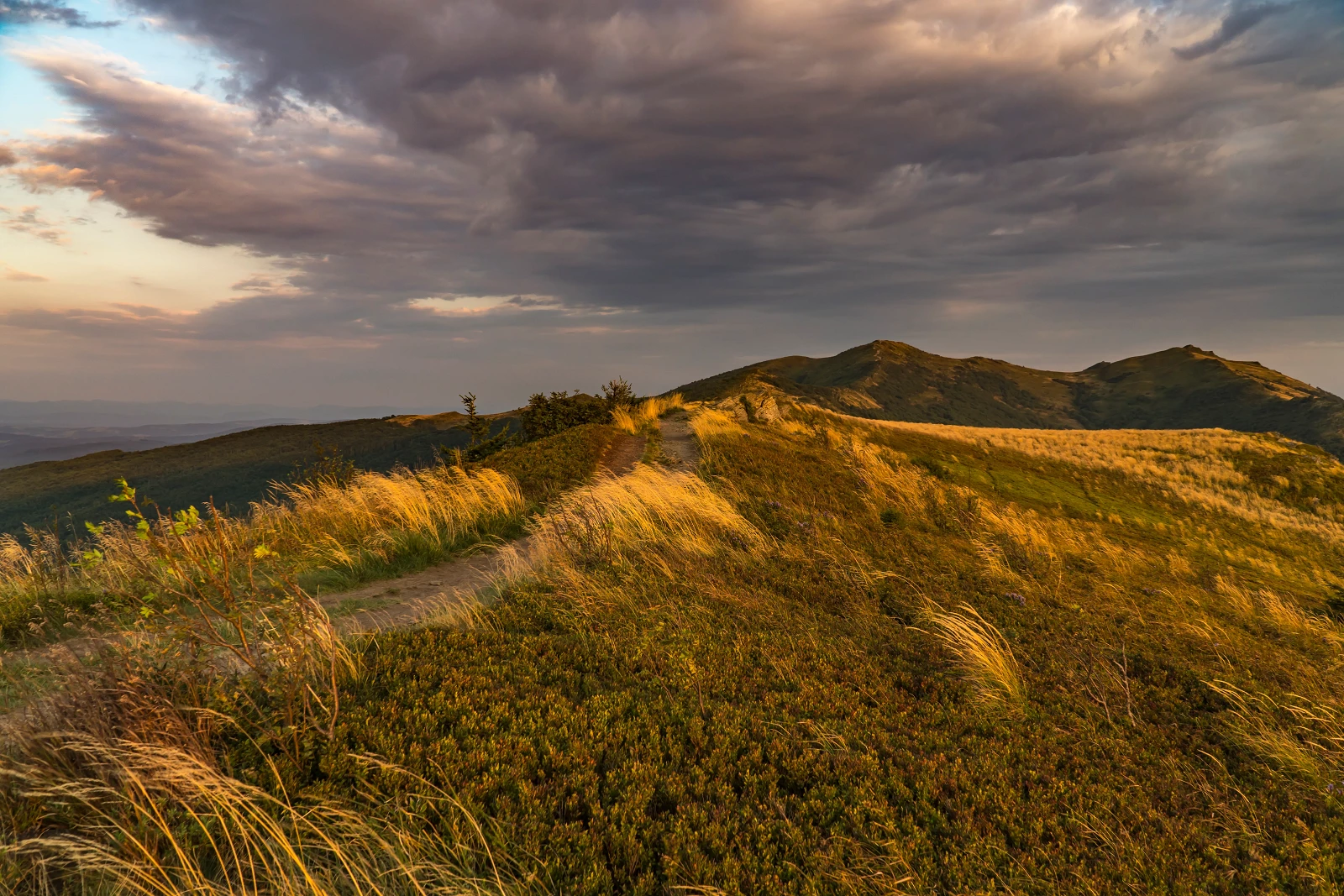
6. Bukowe Berdo - one of the best places for an autumn panorama
The name itself – roughly translating as “Beech Ridge” – sets high expectations. If you want to find yourself above a sea of autumn-coloured beech trees, Bukowe Berdo should be near the top of your list.
One way to reach the ridge is via the yellow trail from Muczne. Higher up, distinctive rocky outcrops and open terrain appear, offering views of the Tarnica massif, Połonina Caryńska and Połonina Wetlińska, as well as the San Valley.
It is precisely the contrast between the rugged, rocky ridge and the intensely coloured slopes that makes Bukowe Berdo particularly spectacular in autumn.
Practical tip:
If the ridge and panoramic views are your main priorities, Muczne is a convenient starting point. After rainfall, be careful of slippery sections of the trail here as well.
 Bukowe Berdo, photo by Jarosław Affek
7. Krywe – a unique autumn experience in the Bieszczady Mountains
Krywe is a great choice for those who come to the Bieszczady Mountains not only for the scenery but also for their history. Once a village on the San River, today Krywe is primarily a vast and peaceful open space. Among the meadows and trees, you can discover traces of former buildings, old roads and the most distinctive reminder of the village’s former inhabitants – the ruins of the brick Church of St Paraskeva, dating from 1842.
In autumn, the place takes on even more character. The vegetation no longer conceals some of the historical remains, while the valley, surrounded by the colourful slopes of the Otryt range, looks completely different from how it does in summer.
From Zatwarnica, you can follow a marked trail towards Krywe. The suggested route to the ruins of the former manor house and back is approximately 15.8 km long.
Practical tip:
Stay on designated routes – entry to the “Krywe” Nature Reserve itself is prohibited.
 Solina, photo by Piotr Lisowski
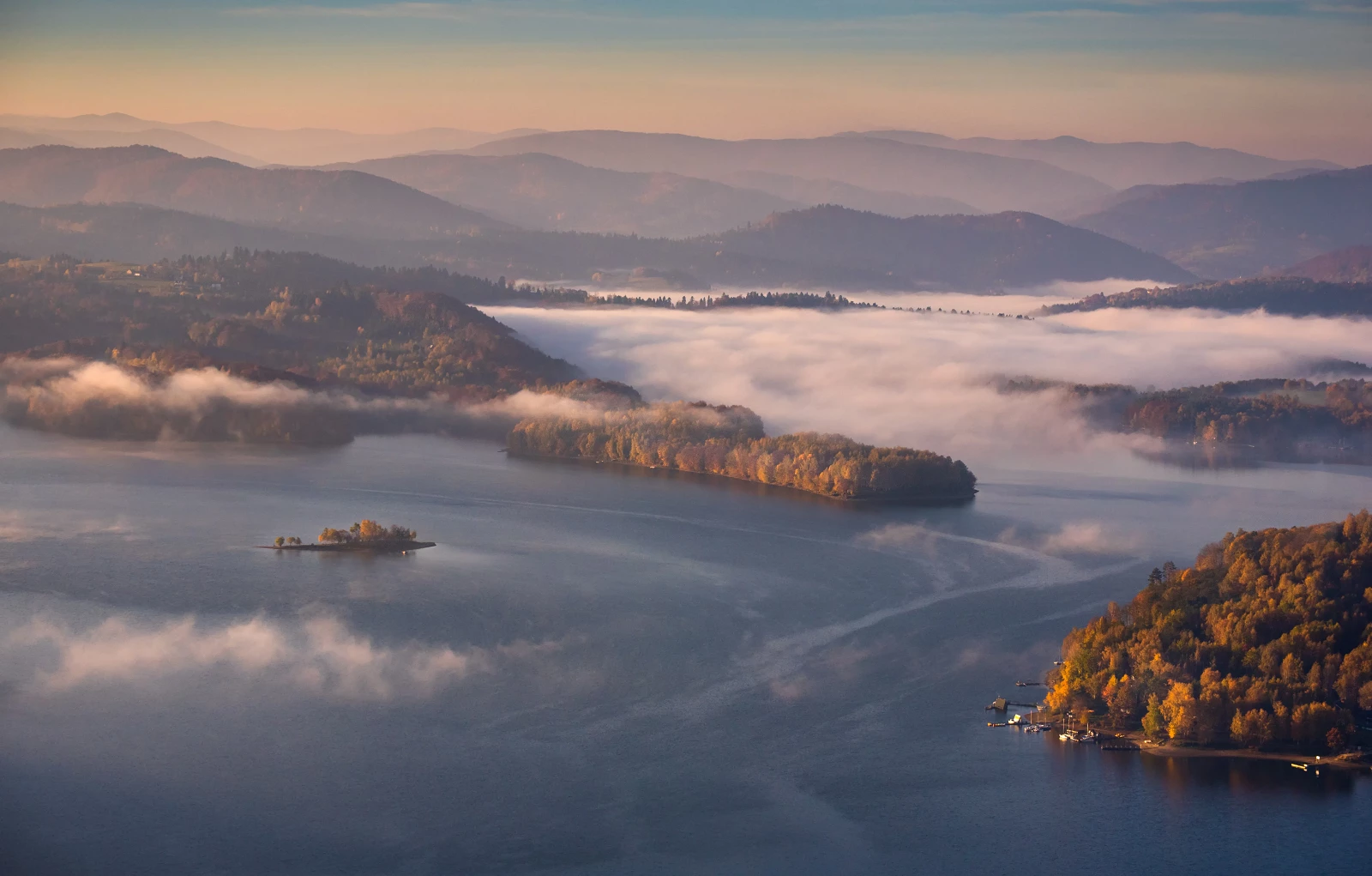
8. The hills above Lake Solina – more colourful than green in autumn
After several mountain hikes, it is worth slowing down and heading to Lake Solina. In autumn, the area around the dam has a completely different atmosphere from the height of the summer holiday season. It is quieter, while the hills surrounding the lake turn shades of gold, red and orange.
Take a walk across the top of the Solina Dam and then simply follow the lakeshore, stopping at viewpoints along the way. With the autumn colours reflected in the water, this is one of the most enjoyable destinations for a more relaxing afternoon in the Bieszczady Mountains.
Practical tip:
Plan your walk for late afternoon. In good weather, the light just before sunset beautifully highlights the colours of the forests surrounding Lake Solina. It is also an excellent option for a day when you want a break from longer mountain trails.
When is the best time to visit the Bieszczady Mountains for golden autumn?
There is no single date that guarantees perfect colors every year; it all depends on temperatures, precipitation, and elevation. Changes begin to appear as early as late September, though the most intense colors are usually associated with October. However, at higher elevations, autumn can quickly give way to early winter conditions.
A few things to remember before setting out:
- Check the latest weather forecast and announcements from Bieszczady National Park – mountain weather can change quickly.
- Set off early – autumn days are getting shorter, and mornings often offer the most beautiful light.
- Wear hiking boots with good grip – after rain, the clay-based trails of the Bieszczady Mountains can become extremely slippery.
- Do not plan every minute of your trip. In autumn, sometimes it is worth simply stopping on a ridge, beside a mountain lake or in the middle of a beech forest and taking a moment to enjoy the view.
Golden autumn in the Bieszczady Mountains does not last long. But when it arrives, even places you already know from summer trips can surprise you all over again.
Photo by: Zofia Betleja