
The attractions of the Beskid Niski have a completely different character from the popular sights found in Poland’s busiest mountain ranges. Here are some places worth visiting if you want to escape the crowds and discover a quieter side of the mountains. For centuries, the Lemkos helped shape the landscape and culture of this region, and traces of their heritage can still be found today in wooden Orthodox and Greek Catholic churches, old cemeteries and abandoned valleys.
So, if you are interested in some of the less obvious attractions in the Low Beskid, it is worth venturing beyond the most popular routes. We have selected natural and historical attractions, peaceful hiking trails, and places where you can simply stop and stay a little longer.
1. Źródliska Jasiołki one of the wildest corners of Poland
The Źródliska Jasiołki Nature Reserve protects the headwaters of the Jasiołka and Wisłok rivers. It encompasses forests, meadows, peat bogs and wetlands, creating a landscape completely different from what you might expect from Poland’s most popular mountain trails.
The reserve was established in 1993 and covers approximately 1,600 hectares. Much of its area is covered by forest, dominated by fertile Carpathian beech woodland. There are also peat bogs, marshes and natural spring areas.
The natural character of this place is closely intertwined with its history. The reserve was once home to Jasiel, a former Lemko village founded in the 16th century. The village buildings are long gone, but a cemetery and several memorial sites remain.
It is this combination of nature, open space and traces of former settlements that makes the area around the headwaters of the Jasiołka one of those fascinating places where you can truly experience the unique character of the Low Beskid.
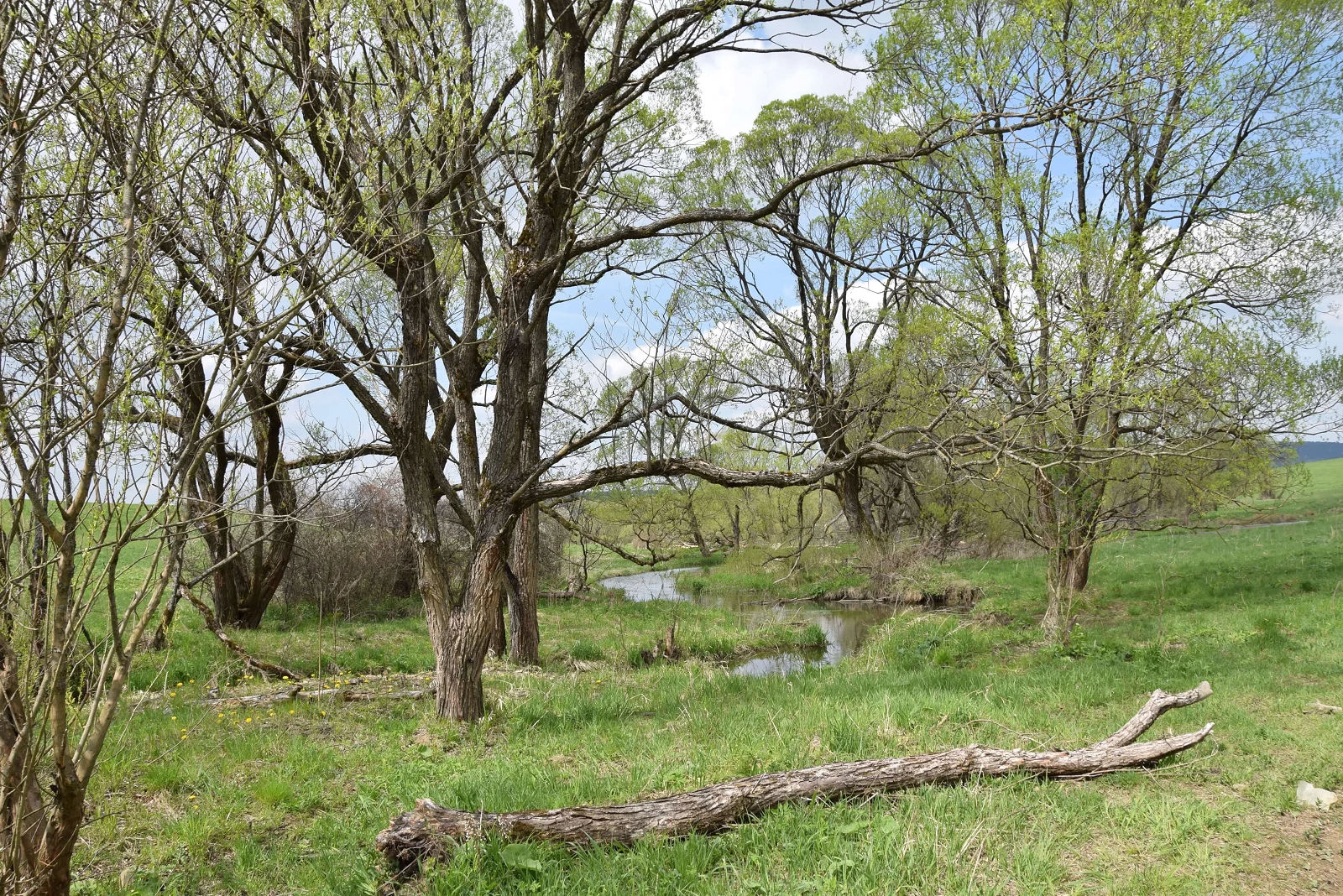 Źródła Jasiołki, photo by Archiwum PROT
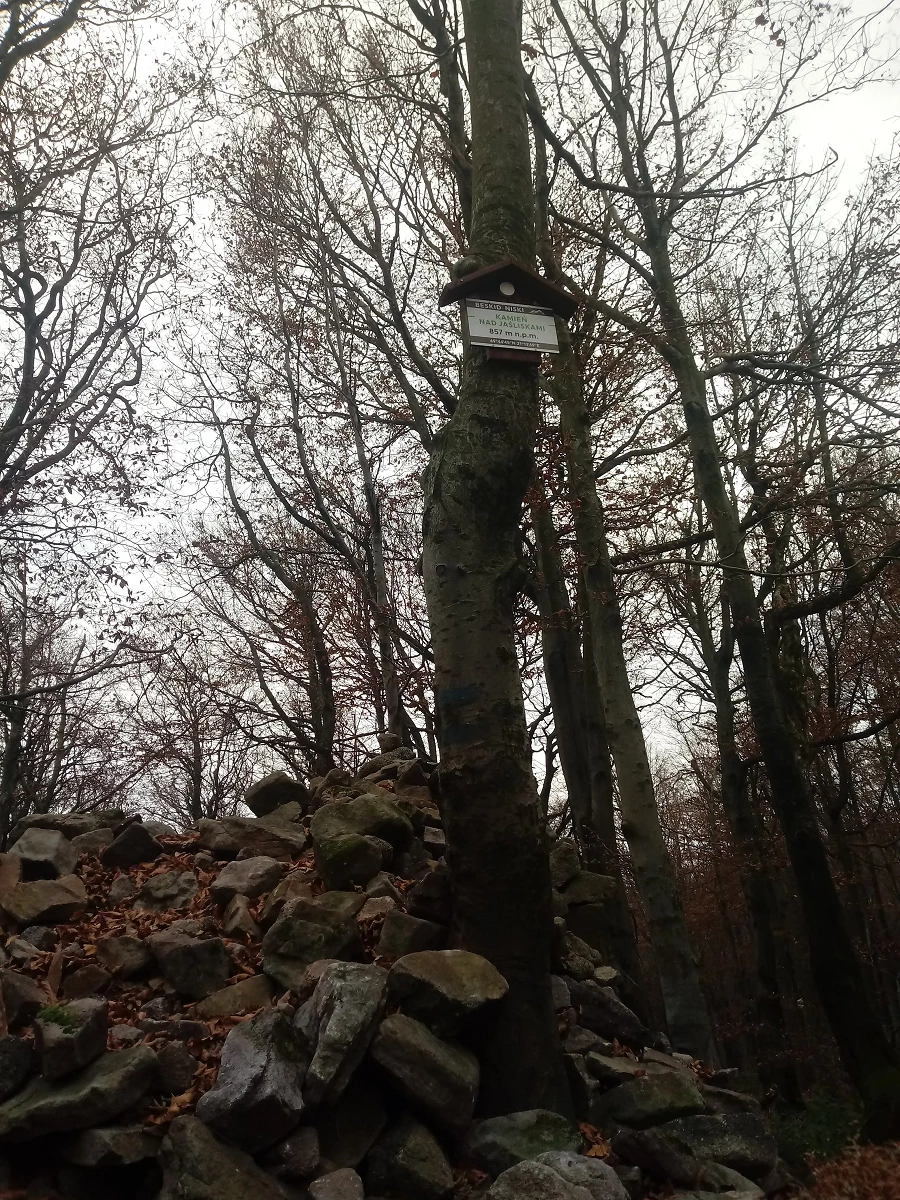 Kamień nad Jaśliskami, photo by Podkarpackie Travel
2. Kamień nad Jaśliskami a mountain to be enjoyed without rushing
Kamień nad Jaśliskami rises to 857 metres above sea level and is one of the more interesting hiking destinations in the southern part of Poland’s Podkarpackie region. Reaching the summit, however, is not the only reason to come here. The hike itself, through extensive beech and beech-fir forests, is just as important.
The summit and its slopes are protected within the Kamień nad Jaśliskami Nature Reserve, which covers more than 300 hectares. The reserve protects the characteristic landscape of the Low Beskid, including its forests, rock formations and unusual marshy areas locally known as “berezednie”.
Kamień is therefore an excellent choice for hikers who do not need extensive tourist infrastructure or a crowded viewpoint waiting for them at the end of the trail. The main attractions here are the forest, the rocks and the peaceful mountain hike itself. The local hiking trails offer a chance to discover a less commercial side of the Low Beskid.
3. Diabli Kamień in Folusz a rocky giant hidden in the forest
The Low Beskid is usually associated with gentle, forested ridges. In Folusz, however, you can discover an attraction that reveals a much rockier side of these mountains.
Diabli Kamień is an impressive outcrop of Magura sandstone hidden in the forest within Magura National Park. The enormous rock formations, split by deep cracks and covered in moss, are best appreciated by walking around them. A marked nature trail beginning in Folusz leads to the site.
The entire “Folusz” nature trail is approximately 4 km long and connects two distinctive attractions: the Magurski Waterfall and Diabli Kamień. Allow around two hours to complete the entire route. It is one of those hiking trails that works perfectly even if you are not planning an all-day mountain adventure.
The place also has its own legend. According to one version of the story, devils were carrying enormous boulders to destroy a church that was being built, but failed to reach their destination. This is said to be how the rocks got their name, which still adds a touch of mystery to a walk through the forest today.
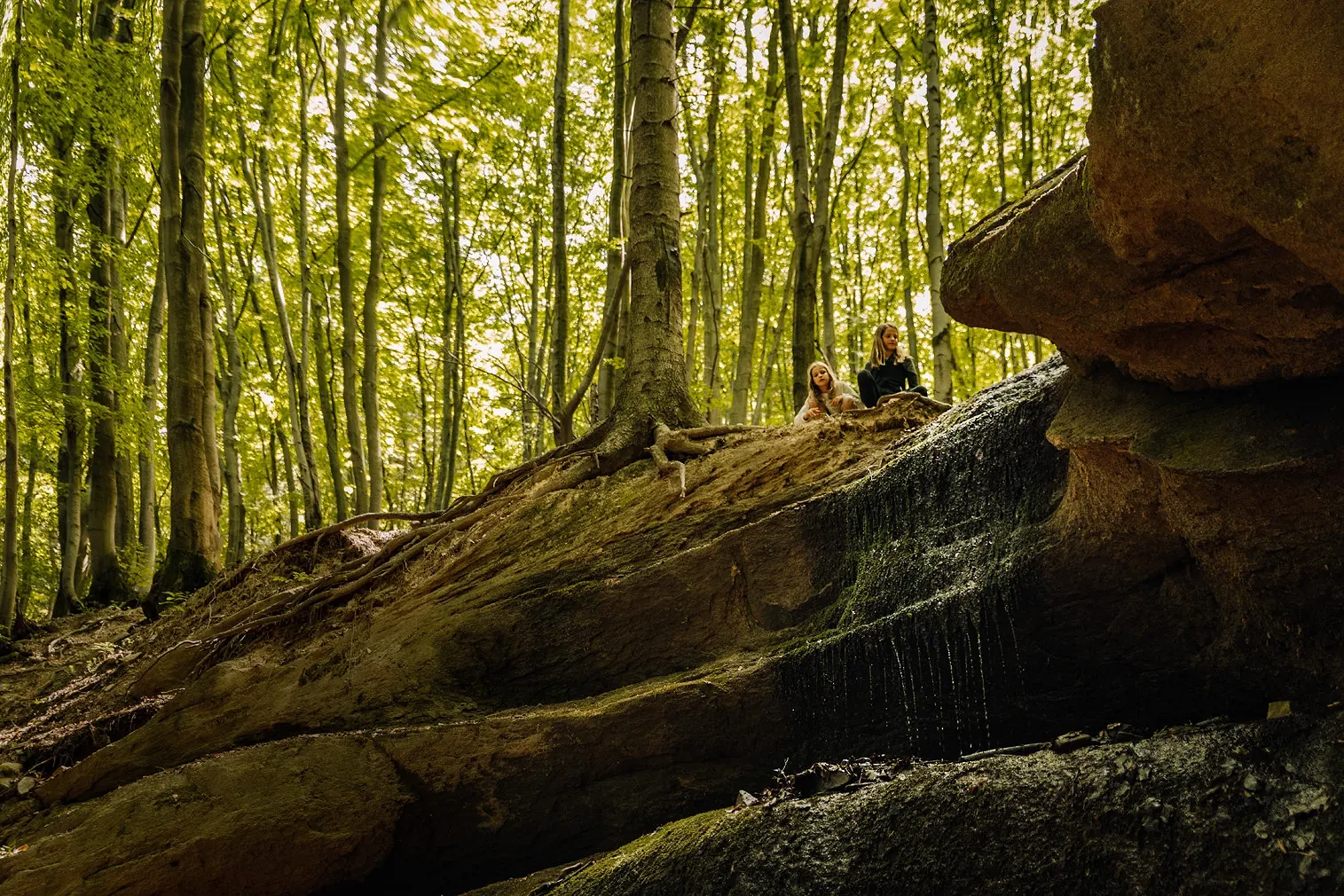 Folusz, photo by Gabriela Joniec
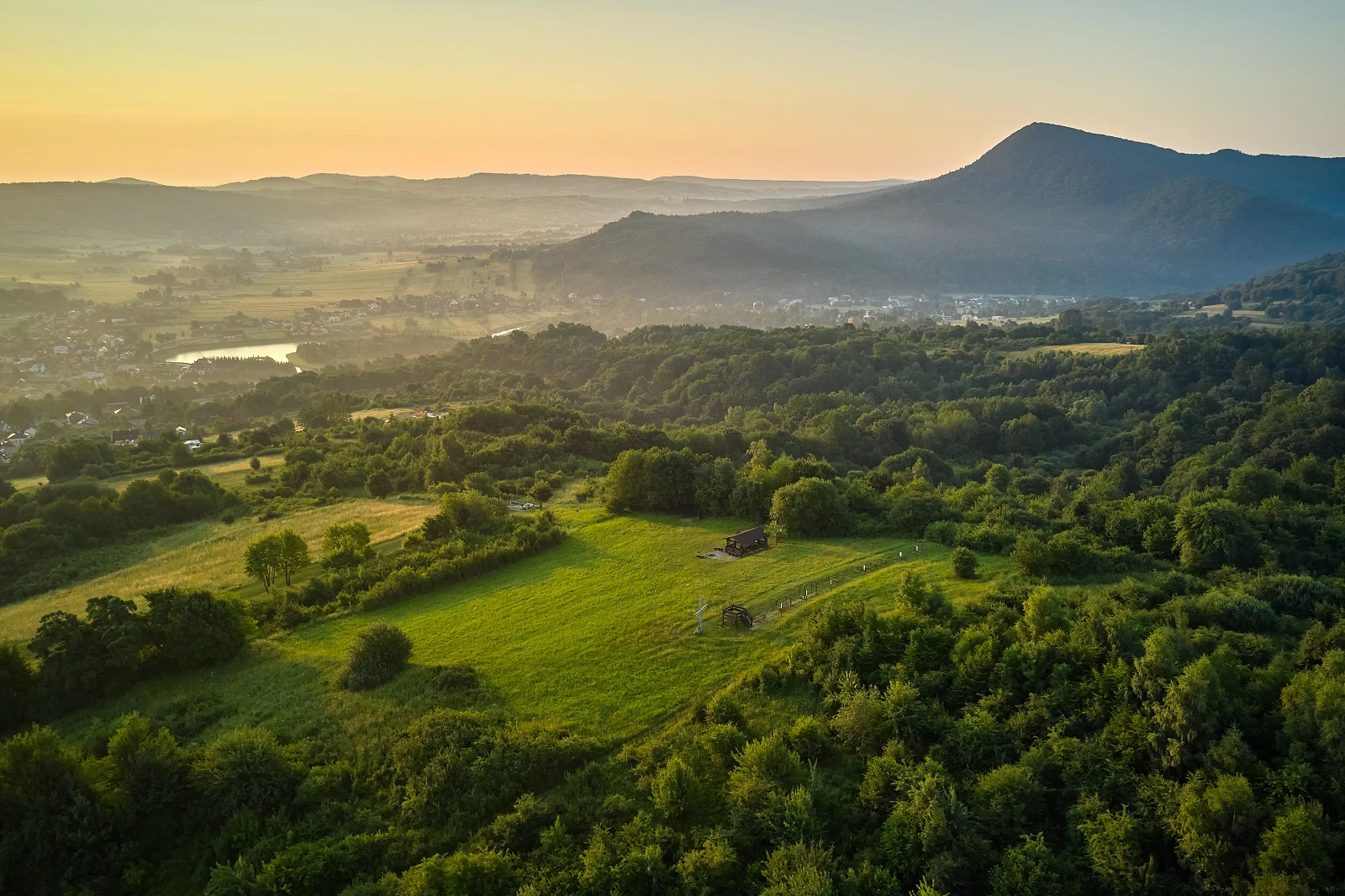 Cergowa, photo by Krystian Kłysewicz
4. Cergowa panoramic views of the Beskid Niski from above
Cergowa is the most traditionally “mountain-like” destination on this list. Its highest peak reaches 716 metres above sea level, and a viewing tower approximately 22 metres high stands at the summit. Thanks to the tower, even this densely forested mountain offers sweeping views of the surrounding area.
There is more to Cergowa than its panorama, however. Fissure caves can be found on its southern slopes, while on the northern side lies Złota Studzienka, or the “Golden Well”, a spring associated with the cult of St John of Dukla. Parts of the forests covering the mountain are protected as a nature reserve.
Of the seven places on this list, Cergowa is one of the better-known destinations, so complete solitude can be difficult to guarantee on a sunny weekend. Even so, the number of visitors here is still difficult to compare with the crowds found on the busiest trails in other popular Carpathian mountain ranges.
It is particularly worth visiting on a weekday or early in the morning. At these times, Cergowa combines some of the best features of the Low Beskid – a peaceful walk through the forest followed by the reward of an expansive view. If you are looking for tourist attractions offering a classic mountain hike, Cergowa certainly deserves your attention.
5. The Hermitage of St John of Dukla – a place made for peace and quiet
A few kilometres south of Dukla, near Trzciana, lies a place with a completely different character. The Hermitage of St John of Dukla, also known as the Hermitage in the Forest, is located among the woods on the slopes of Mount Zaśpit.
The site is associated with St John of Dukla and has long been a destination for pilgrims. Among the features found here are a chapel and a natural spring. You can drive to a car park near the hermitage, from where only a short walk remains, although a more rewarding way to explore the area is to combine your visit with a longer hike.
Naturally, this is not a place completely free of visitors, particularly during religious celebrations. On an ordinary day, however, the woodland surroundings and distance from the noise of towns and cities create an atmosphere that perfectly reflects the peaceful character of the Low Beskid.
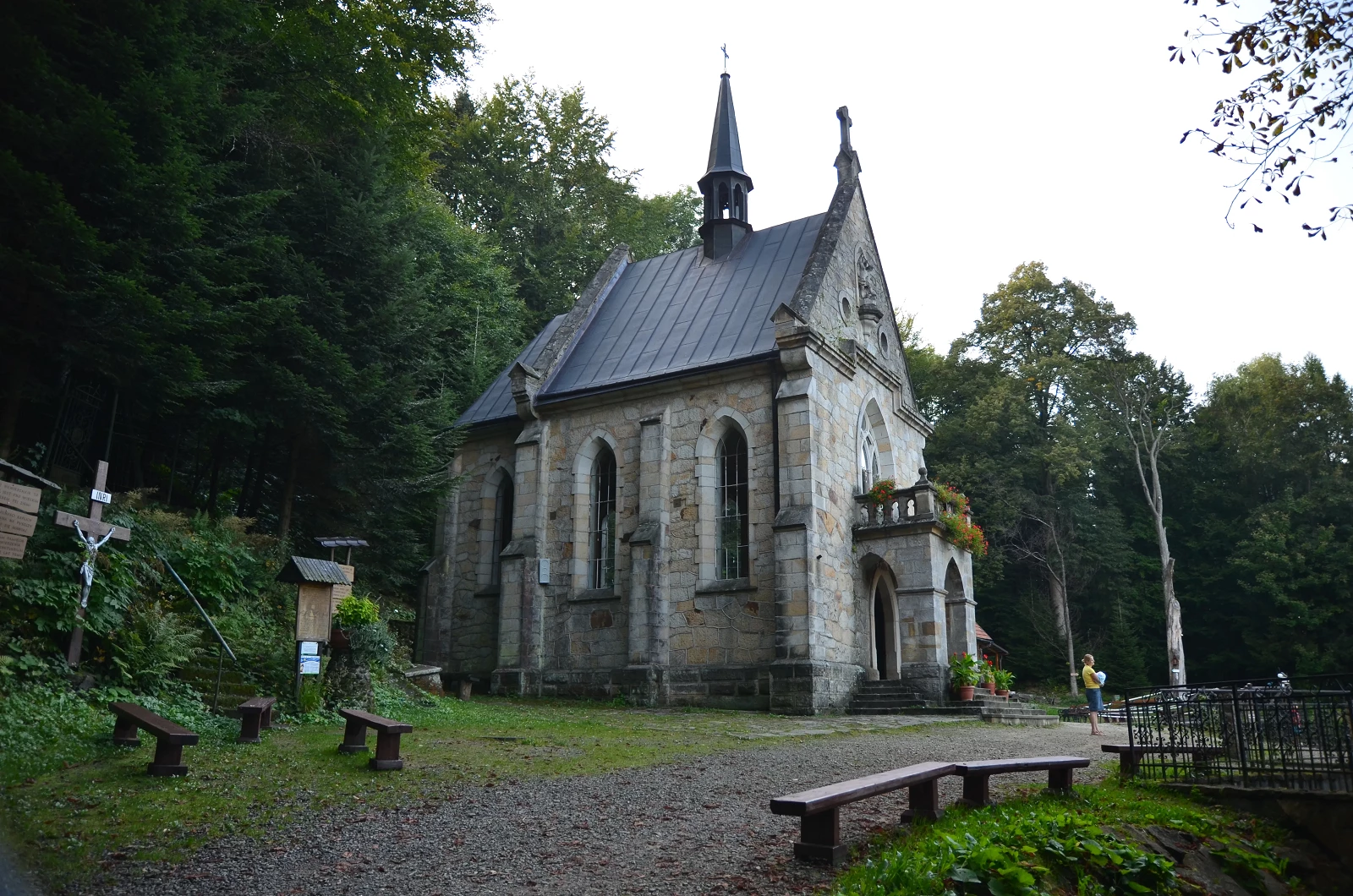 Pustelnia św. Jana z Dukli, photo by Agnieszka Rokitowska
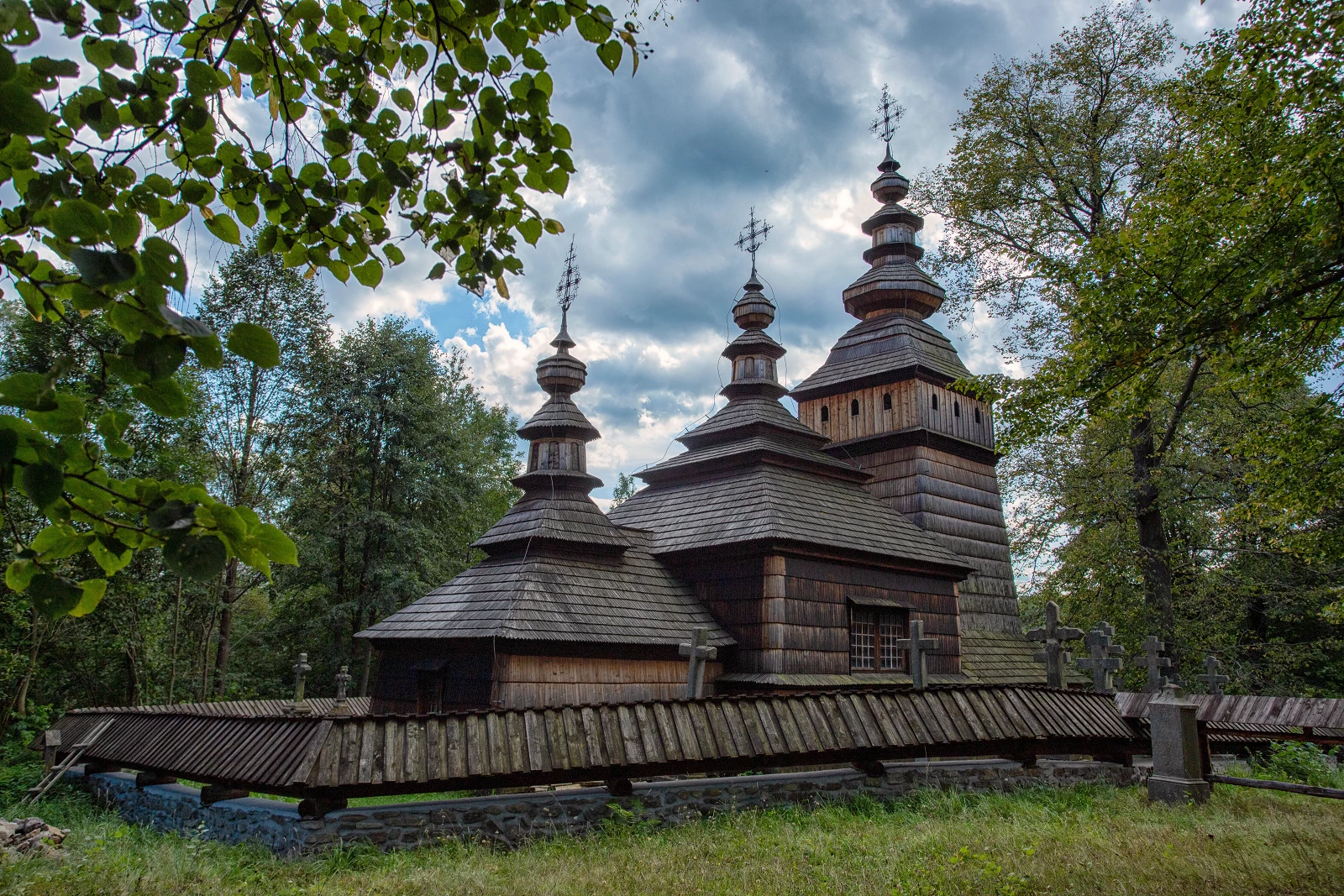 Tserkov in Kotań, photo by Krystian Kłysewicz
6. Tserkov in Kotań - a remarkable wooden reminder of the Lemko past
You do not have to climb a mountain to discover one of the most fascinating places in the Low Beskid. The small village of Kotań is home to the former Greek Catholic Church of St Cosmas and St Damian, a beautiful example of the wooden church architecture characteristic of the western and central Lemko region. The present church was built in the 18th century and retains its distinctive three-part structure.
Following the displacement of the Lemkos, the church was left unattended for some time. It underwent extensive restoration in the 1960s. Today, the building serves as a Roman Catholic church.
The area surrounding the church is particularly interesting. A lapidarium here contains stone gravestones, crosses and statues from former Lemko villages in the region, including Nieznajowa, Żydowskie and Ciechania.
Kotań is a place where it is worth staying a little longer. Take time not only to admire the wooden architecture but also to examine the old stone crosses. They are reminders that generations of Lemkos shaped the culture and landscape of this region. Today, wooden churches, cemeteries and roadside crosses are among the most valuable historical attractions of the Low Beskid.
7. Polany Surowiczne - a village that no longer exists
The final destination on our list is perhaps the place that best explains what makes the Low Beskid so distinctive. Today, Polany Surowiczne is an uninhabited valley. Before the Second World War, however, it was home to a large village populated primarily by Lemkos. During the interwar period, around a thousand people lived here, in more than one hundred households.
After the war, the inhabitants were displaced to the Soviet Union. The houses disappeared, the wooden church was dismantled, and nature gradually began reclaiming the former fields. Traces of the old village have nevertheless survived to the present day, including a brick bell tower, the remains of the church site and a cemetery. In recent years, efforts have been made to tidy up and preserve the site.
Polany Surowiczne is not about ticking another attraction off your sightseeing list. The landscape itself is what matters most. Walking through this now-empty valley, it is difficult to imagine that only several decades ago it was home to the everyday lives of hundreds of people.
And that is precisely why Polany Surowiczne is such a fitting place to end a journey through the quieter side of the Low Beskid. The region’s silence is one of its greatest attractions for visitors, but that silence also has a history. These empty valleys were not always empty.
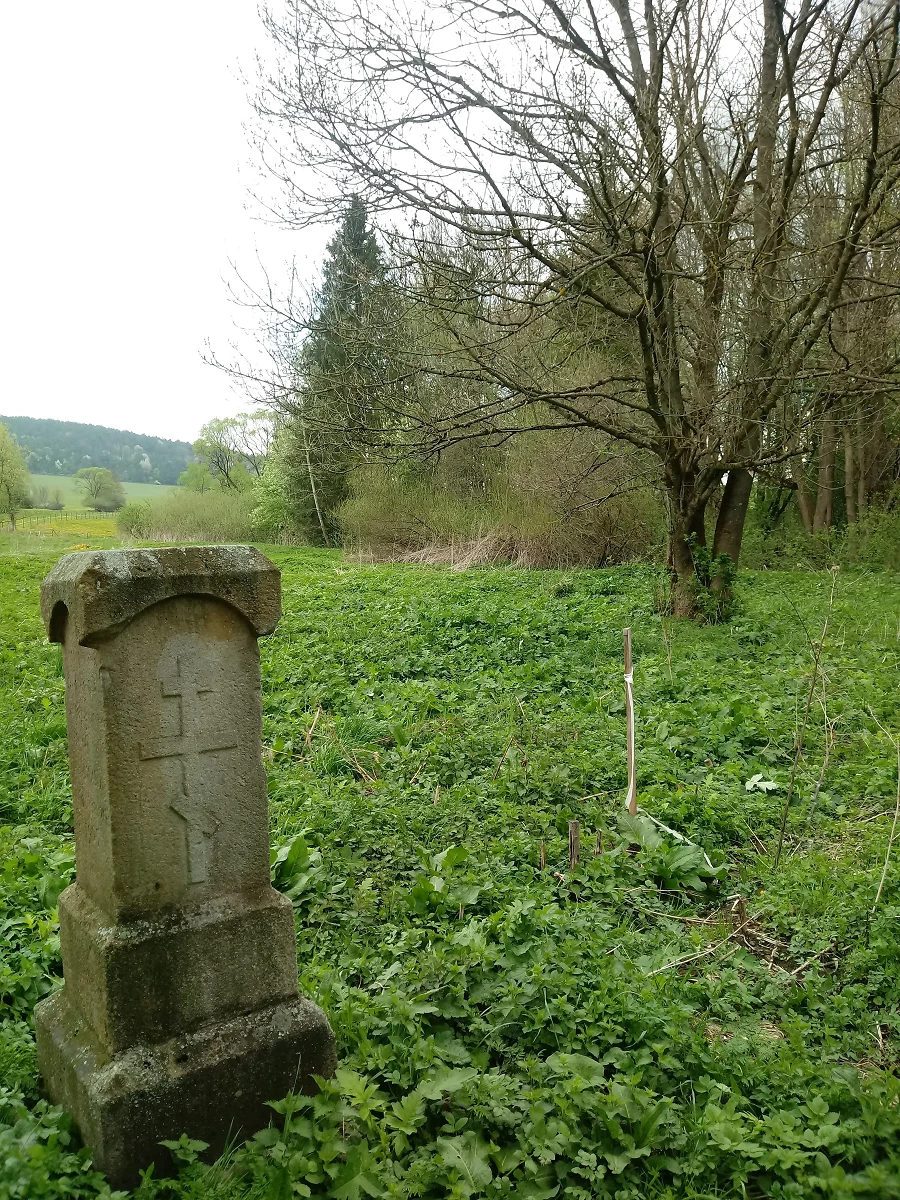 Polany Surowiczne, photo by Alicja Marzec
Low Beskid for those who are in no hurry
The greatest strength of the Low Beskid is its sense of space. You can enter a beech forest, discover traces of a vanished village, stop beside an old wooden church or simply walk for several hours.
Źródliska Jasiołki, Kamień nad Jaśliskami, Diabli Kamień, Cergowa, the Hermitage of St John of Dukla, the tserkov in Kotań and Polany Surowiczne reveal seven different sides of these mountains. They are fascinating destinations for nature and history lovers alike, as well as for those who value peaceful hiking trails above all else. The local tourist attractions offer an opportunity to explore the Podkarpackie region at a much slower pace than in Poland’s most popular tourist destinations.
So, if you are wondering which attractions in the Low Beskid to choose for your next trip, it is not always worth limiting yourself to a list of the best-known sights. Sometimes the best places worth visiting are those found well off the beaten track.
And perhaps that is the greatest luxury the Low Beskid has to offer: you do not have to see everything. Sometimes, all you need is an empty path ahead of you and enough space for your own thoughts.
Photo by: Krystian Kłysewicz